museum or portal through time, you decide
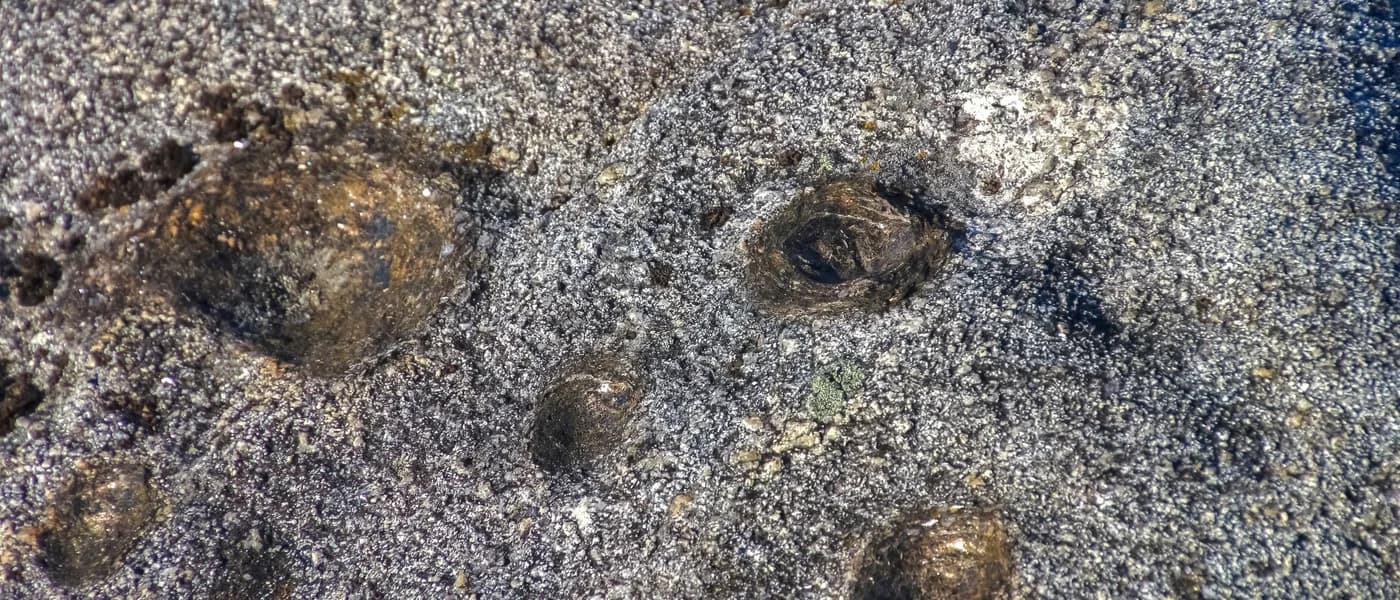
There are rocks that "give birth" to stones. It's not a metaphor or a local legend: it's geology working at a speed that fools the eye. The pedras parideiras of Castanheira, in the Arouca mountains, are granite outcrops with spherical andalusite nodules that, as the granite erodes at the surface, emerge as if they were coming out of inside the rock. The phenomenon has a scientific name and everything, but anyone seeing it for the first time would rather believe the magical version.
The Centro de Interpretação das Pedras Parideiras exists precisely to give you both versions. Here the geological process is explained with rigour, but without killing the wonder. It's one of the rare occurrences of its kind documented in the world, and it's part of the Arouca Geopark, a member of the UNESCO Global Geoparks network. That's not marketing: it's recognition that this territory holds things that don't easily repeat anywhere else.
The centre sits in the village of Castanheira and works as a non-negotiable starting point before you head to the outcrop. The walk to the rocks is short, but doing it without context is wasting half of the experience. Walking out of here with an explanation of what you're about to see completely changes the way you look at the stones out there, on a mountainside where the granite takes millennia to reveal what's inside it.
what the geology forces you to think about
The pedras parideiras come from a process called exfoliation by differential weathering: the surrounding granite breaks down faster than the andalusite nodules it contains, and those nodules end up exposed as the rock around them recedes. What looks like a slow eruption is actually a kind of slow-motion reveal lasting millions of years.
The andalusite cropping out here has a specific mineral composition tied to the pressure and temperature conditions under which the original magma crystallised. You don't find this in just any granite. The combination of rock type, exposure and rate of erosion created a natural laboratory here that geologists are still studying. The centre gives you access to that layer of reading without needing to have sat through any petrography class.
come prepared for
- spherical nodules pushing out of the rock as if they were budding
- explanations that make the phenomenon stranger, not less
- a small mountain village with nothing staged around it
- the walk to the outcrop after the visit to the centre